

Three months ago, I was drowning in takeout guilt and delivery apps. Every Tuesday night ended the same way: scrolling through menus, spending $45 on mediocre Korean food, and feeling terrible about both my wallet and my waistline. Then my friend Sarah texted me a photo of the most gorgeous rice bowl I’d ever seen.
“Made it at home in 40 minutes,” she said. I didn’t believe her until she sent me the recipe. That weekend, I grabbed gochujang from the Asian market and gave it a shot. My kitchen smelled like my favorite Korean restaurant within twenty minutes.
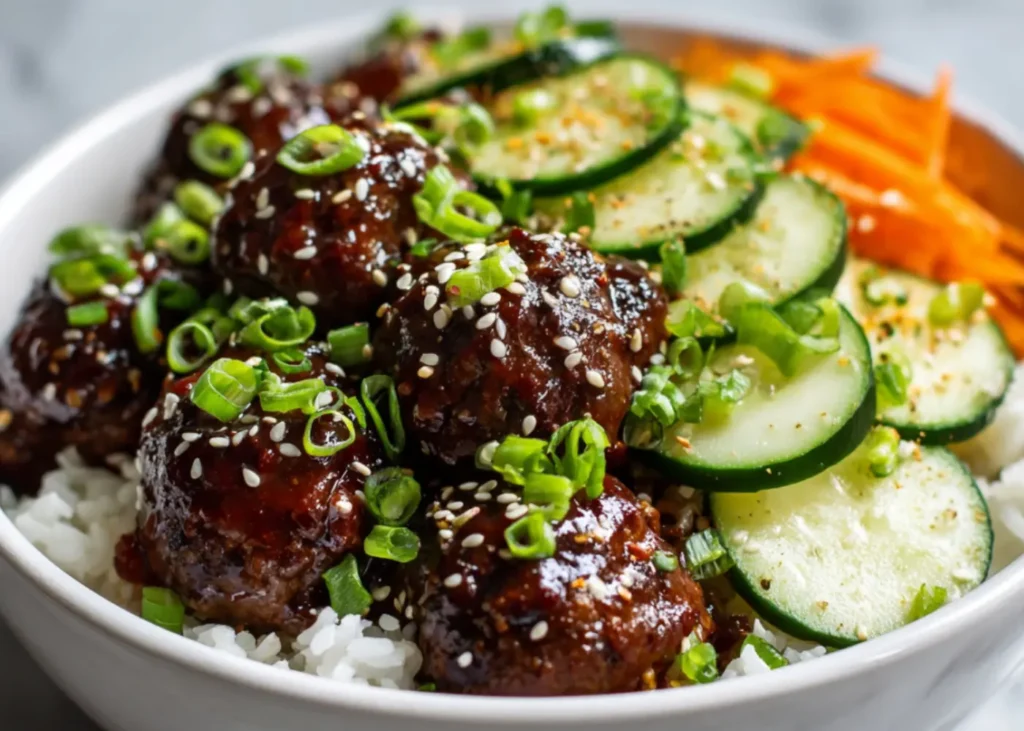
The meatballs came out juicy and perfectly glazed. The sauce was sticky, sweet, and just spicy enough to make my nose tingle. My husband ate two bowls and asked when I’d make it again. Now these Korean BBQ meatball rice bowls show up on our table at least twice a month, and I’ve never ordered Korean takeout since.
Table of Contents
Why Korean BBQ Meatball Rice Bowls Work Every Time
These bowls solve the weeknight dinner problem without sacrificing flavor or nutrition. Moreover, you get restaurant-quality Korean BBQ at home for a fraction of the cost. One batch feeds four people for about $12 total.
The homemade meatballs stay tender and juicy because you’re not overcooking them. The gochujang glaze clings to every surface, delivering that signature sweet, spicy, umami punch in every bite. Furthermore, the fresh vegetables add crunch and balance to the rich, savory meatballs.
This recipe comes together in under 45 minutes from start to finish. You can prep the meatballs ahead, freeze them, and have dinner ready in 15 minutes on busy nights. Additionally, it’s incredibly flexible for picky eaters or dietary restrictions.
What You Need for Korean BBQ Meatball Rice Bowls

The Meatballs
Ground beef forms the base of these flavorful meatballs. Use 80/20 or 85/15 for the best balance of flavor and juiciness. Leaner beef will make dry, tough meatballs that nobody wants to eat.
Breadcrumbs bind everything together while keeping the texture tender. Use plain or panko breadcrumbs, whichever you have on hand. For a gluten-free version, swap in crushed rice crackers or gluten-free breadcrumbs.
One large egg acts as the glue that holds your meatballs together. Room temperature eggs mix more evenly than cold ones straight from the fridge. In contrast, cold eggs can make the meat seize up and become tough.
Fresh minced garlic and grated ginger provide the aromatic foundation of Korean cooking. Don’t skip these or use the jarred stuff. Fresh aromatics make all the difference between good and incredible.
The Korean BBQ Sauce
Gochujang is the star ingredient that makes this dish authentically Korean. This fermented chili paste brings heat, depth, and a subtle sweetness that you can’t replicate with sriracha or hot sauce. You can find it at any Asian market or in the international aisle of most grocery stores.
Soy sauce adds the essential salty, umami backbone. Use regular soy sauce or tamari for gluten-free. Low sodium works best because you can control the salt level yourself.
Brown sugar balances the heat from the gochujang with caramelized sweetness. It also helps the sauce thicken and become glossy as it reduces. Honey or maple syrup work as substitutes if needed.
Sesame oil brings that nutty, toasted aroma that screams Korean cuisine. A little goes a long way, so don’t overdo it. Too much sesame oil tastes like drinking perfume.
Rice vinegar adds brightness and cuts through the richness of the beef and sauce. It keeps the bowl from tasting heavy or one-dimensional. Apple cider vinegar works in a pinch, but rice vinegar is more authentic.
The Bowl Components
Short-grain white rice is traditional for Korean rice bowls. It’s sticky enough to pick up with chopsticks but not mushy. Sushi rice or Calrose rice both work perfectly. However, jasmine rice, brown rice, or cauliflower rice are all excellent alternatives.
Fresh cucumber slices add cool crunch that contrasts beautifully with the warm, spicy meatballs. English cucumbers or Persian cucumbers work best because they have fewer seeds and thinner skin.
Julienned carrots bring sweetness, color, and extra vegetables to the bowl. Use a julienne peeler or mandoline to make thin, even strips. Shredded carrots from a bag work too if you’re short on time.
Chopped green onions provide a sharp, fresh bite that wakes up the whole dish. Use both the white and green parts for maximum flavor and visual appeal.
Sesame seeds are optional but add a nice toasted crunch and make the bowls look restaurant-quality. Toast them in a dry pan for 2 minutes to intensify their nutty flavor.
How to Make Korean BBQ Meatball Rice Bowls
Mix the Meatballs
In a large mixing bowl, combine ground beef, breadcrumbs, egg, minced garlic, grated ginger, and 1 tablespoon soy sauce. Use your hands or a fork to mix until just combined.
Don’t overmix the meat or your meatballs will turn out dense and tough. Stop mixing as soon as you don’t see any more dry breadcrumbs or egg streaks. The mixture should still look a bit rough and not perfectly smooth.
Roll the mixture into bite-sized balls about 1 inch in diameter. You should get approximately 20 to 24 meatballs from one pound of beef. Wet your hands slightly to prevent sticking.
Cook the Meatballs
Heat a tablespoon of neutral oil in a large skillet over medium heat. When the oil shimmers, add the meatballs in a single layer without crowding the pan.
Cook for 8 to 10 minutes, turning occasionally, until browned on all sides and cooked through. The internal temperature should reach 160°F. Don’t move them too much or they won’t develop that nice brown crust.
Transfer the cooked meatballs to a plate and set aside. Leave any browned bits in the pan because they’ll add flavor to your sauce.
Make the Korean BBQ Sauce
In the same skillet, whisk together remaining soy sauce, brown sugar, gochujang, rice vinegar, minced garlic, grated ginger, and sesame oil. The residual heat will help dissolve the sugar.
Turn the heat to medium and let the sauce simmer for 3 to 5 minutes, whisking occasionally. It should reduce slightly and become thick enough to coat the back of a spoon. Consequently, the sauce will cling to the meatballs instead of running off.
Taste the sauce and adjust seasoning. If it’s too spicy, add more brown sugar. If it’s too sweet, add a splash more vinegar or soy sauce.
Glaze the Meatballs
Return the cooked meatballs to the skillet with the sauce. Toss gently until every meatball is completely coated in the sticky glaze.
Let them cook together for another 2 minutes so the sauce caramelizes slightly on the meatballs. This creates that irresistible sticky-sweet exterior you get at Korean restaurants.
Assemble the Bowls
Scoop warm cooked rice into four serving bowls. Arrange the glazed meatballs on top, making sure to drizzle any extra sauce from the pan over the rice.
Add sliced cucumber, julienned carrots, and chopped green onions around the meatballs. Sprinkle with sesame seeds if using. Serve immediately while the meatballs are hot and the vegetables are crisp.
Print
korean bbq meatball rice bowls
These Korean BBQ meatball rice bowls feature juicy homemade meatballs glazed in sweet and spicy gochujang sauce, served over fluffy rice with fresh vegetables. Ready in 40 minutes and perfect for weeknight dinners or meal prep.
Ingredients
- 1 pound ground beef, 80/20 or 85/15
- 1/2 cup breadcrumbs, plain or panko
- 1 large egg
- 2 cloves garlic, minced
- 1 tablespoon fresh ginger, grated
- 2 tablespoons soy sauce, divided
- 2 tablespoons brown sugar
- 1 1/2 tablespoons gochujang, Korean chili paste
- 1 teaspoon sesame oil
- 1 tablespoon rice vinegar
- 3 cups cooked white rice, short grain or sushi rice
- 1/2 cucumber, sliced
- 1/2 cup carrots, julienned
- 2 green onions, chopped
- 1 tablespoon sesame seeds, optional
- 1 tablespoon neutral oil, for cooking
Instructions
- In a large mixing bowl, combine ground beef, breadcrumbs, egg, minced garlic, grated ginger, and 1 tablespoon soy sauce. Mix until just combined, being careful not to overmix. Roll into bite-sized balls about 1 inch in diameter.
- Heat neutral oil in a large skillet over medium heat. Add meatballs in a single layer without crowding. Cook for 8 to 10 minutes, turning occasionally, until browned on all sides and cooked through to 160°F internal temperature. Transfer to a plate and set aside.
- In the same skillet, whisk together remaining 1 tablespoon soy sauce, brown sugar, gochujang, rice vinegar, minced garlic, grated ginger, and sesame oil. Simmer over medium heat for 3 to 5 minutes, whisking occasionally, until sauce thickens slightly.
- Return cooked meatballs to the skillet with the sauce. Toss gently to coat every meatball completely. Cook for 2 more minutes to let the sauce caramelize slightly on the meatballs.
- Scoop warm cooked rice into four serving bowls. Top with glazed meatballs and drizzle any extra sauce from the pan over the rice.
- Arrange sliced cucumber, julienned carrots, and chopped green onions around the meatballs. Sprinkle with sesame seeds if using. Serve immediately while hot.
Notes
Make Ahead: Cook meatballs up to 3 days in advance and store in fridge. Reheat in fresh sauce before serving.
Freezer Friendly: Freeze cooked meatballs without sauce for up to 3 months. Thaw overnight in fridge and glaze with fresh sauce.
Spice Level: Reduce gochujang to 1 tablespoon for less heat. Add red pepper flakes for extra kick.
Gluten-Free: Use gluten-free breadcrumbs and tamari instead of soy sauce. Check gochujang label for gluten.
Storage: Store components separately in airtight containers for up to 4 days. Add fresh vegetables before serving.
Ways to Customize Korean BBQ Meatball Rice Bowls
Protein Swaps
Use ground turkey or ground chicken for a leaner version. The cooking method stays exactly the same. Just watch them carefully because poultry cooks faster and can dry out more easily than beef.
For a vegetarian option, substitute crumbled firm tofu or plant-based ground meat. Press the tofu first to remove excess moisture, then mix with the same seasonings and binders.
Heat Level Adjustments
If you can’t handle spice, reduce the gochujang to 1 tablespoon or use a mild version. You can also add a spoonful of peanut butter or tahini to the sauce to mellow the heat without sacrificing flavor.
For extra heat lovers, add red pepper flakes or a drizzle of chili oil on top. Sliced fresh jalapeños or Korean chili peppers make great spicy garnishes too.
Vegetable Variations
Add kimchi for authentic Korean flavor and probiotic benefits. The tangy, spicy fermented cabbage cuts through the richness beautifully. Similarly, pickled radish provides a sweet and sour crunch that refreshes your palate between bites.
Steamed or roasted broccoli, bok choy, or snap peas make excellent warm vegetable additions. Shredded red cabbage, sliced radishes, or bean sprouts add extra crunch and freshness.
Base Options
Swap white rice for brown rice, quinoa, or farro for more fiber and nutrients. Rice noodles or glass noodles transform this into a noodle bowl instead of a rice bowl.
For low-carb or keto diets, use cauliflower rice as your base. The meatballs and sauce are already naturally low in carbs, so this swap makes the whole bowl keto-friendly.
How to Serve Korean BBQ Meatball Rice Bowls
Weeknight Dinner
Serve these bowls family-style with all the components in separate dishes. Let everyone build their own bowl with their preferred ratio of meatballs, rice, and vegetables. Kids especially love this interactive approach to dinner.
Top each bowl with a fried egg or soft-boiled egg for extra richness and protein. The runny yolk mixes with the sauce and creates an incredibly creamy coating on the rice.
These pair beautifully with other Asian-inspired dishes. Try serving them alongside egg roll in a bowl for a complete Korean-inspired spread.
Meal Prep
Portion the components into separate meal prep containers. Keep the rice, meatballs with sauce, and fresh vegetables in different compartments or containers.
Store in the refrigerator for up to 4 days. Reheat the rice and meatballs together in the microwave for 2 to 3 minutes, then add the fresh vegetables right before eating. This keeps the vegetables crisp instead of soggy.
The meatballs freeze beautifully for up to 3 months. Freeze them before adding the sauce, then thaw overnight in the fridge and glaze with freshly made sauce.
Storage and Reheating Tips
Store leftover meatballs with sauce in an airtight container for up to 4 days. The sauce gets even better as it sits because the flavors continue to meld together overnight.
Keep the rice separate from the meatballs if possible. Rice absorbs moisture and can make the sauce disappear if stored together for too long.
To reheat, microwave the meatballs and rice together on high for 2 to 3 minutes, stirring halfway through. Add a splash of water if the rice looks dry. Alternatively, reheat in a skillet over medium heat with a tablespoon of water to prevent sticking.
Add fresh vegetables and garnishes right before serving. Don’t reheat the cucumber or carrots because they’ll become limp and unappetizing.
What to Serve with Korean BBQ Meatball Rice Bowls
Kimchi is the classic Korean side dish that belongs with every Korean meal. The spicy, tangy, fermented cabbage cuts through rich flavors and adds beneficial probiotics to your meal.
Miso soup makes a light, warming starter that balances the bold flavors of the BBQ glaze. It’s simple to make and adds an extra dose of umami to your dinner.
Steamed edamame with sea salt provides protein-rich finger food that’s perfect for snacking while you cook or as a side dish. Kids love popping the beans out of the pods.
Seaweed salad brings a cool, umami-rich contrast to the warm, spicy meatballs. The slippery texture and ocean flavor make the meal feel more complete and authentic.
For more Asian bowl inspiration, check out the bang bang chicken bowl for a different flavor profile using similar fresh ingredients.
Common Mistakes to Avoid
Overmixing the Meat
The biggest mistake people make with meatballs is overmixing the ground beef. When you work the meat too much, the proteins develop and create a dense, tough texture instead of tender, juicy meatballs.
Mix just until the ingredients are combined and you can’t see dry breadcrumbs anymore. The mixture should look rough and slightly uneven, not smooth like hamburger patty meat.
Crowding the Pan
Don’t try to cook all the meatballs at once if they don’t fit in a single layer with space between them. Crowding causes them to steam instead of brown, which means no delicious crust.
Cook in batches if necessary. The extra 5 minutes is worth it for properly browned meatballs that actually taste grilled instead of boiled.
Not Adjusting the Sauce
Gochujang brands vary wildly in heat level and saltiness. Always taste your sauce before adding the meatballs and adjust the seasoning to your preference.
Too spicy? Add more brown sugar or a splash of honey. Too sweet? Add more vinegar or soy sauce. Too thick? Thin it with a tablespoon of water at a time.
Frequently Asked Questions
Can I make these meatballs ahead of time? Yes. You can make and cook the meatballs up to 3 days in advance. Store them in the fridge and reheat in the sauce right before serving. You can also freeze cooked meatballs for up to 3 months.
What if I can’t find gochujang? While nothing tastes exactly like gochujang, you can substitute with a mix of sriracha and miso paste. Use 1 tablespoon sriracha plus 1/2 tablespoon miso paste for every 1 1/2 tablespoons of gochujang. The flavor won’t be identical, but it’ll still be delicious.
Is this recipe gluten-free? It can be. Use gluten-free breadcrumbs, tamari instead of regular soy sauce, and check your gochujang label. Most gochujang is gluten-free, but some brands add wheat. Serve over rice, which is naturally gluten-free.
Can I bake the meatballs instead of pan-frying? Absolutely. Arrange meatballs on a parchment-lined baking sheet and bake at 400°F for 15 to 18 minutes until cooked through. They won’t have the same brown crust, but they’ll still taste great once glazed.
How spicy are these meatballs? Moderately spicy with a pleasant warmth that builds as you eat. For less heat, reduce the gochujang to 1 tablespoon. For more kick, add red pepper flakes or use extra gochujang.
Can I use ground pork instead of beef? Yes. Ground pork makes excellent Korean meatballs and is actually more traditional in some Korean recipes. You can also use a 50/50 mix of pork and beef for extra flavor.
Why This Recipe Works So Well
The beauty of Korean BBQ meatball rice bowls is in the contrast. You’ve got hot, spicy, sweet meatballs next to cool, crisp vegetables. Rich, savory sauce balanced by tangy pickles or kimchi. Soft rice against crunchy carrots.
Every bite is different because you’re getting different combinations of flavors and textures. It never gets boring, even when you’re halfway through the bowl. This is similar to how Chinese ground beef stir fries keep your palate interested with varied textures.
The gochujang sauce is also incredibly versatile. Once you have a jar in your fridge, you’ll start using it on everything from grilled chicken to roasted vegetables to fried rice.
Final Thoughts
Korean BBQ meatball rice bowls prove that restaurant-quality Korean food is absolutely achievable at home. You don’t need special equipment or hard-to-find ingredients beyond one jar of gochujang. The results taste just as good as takeout for a fraction of the price and time.
If you love easy, flavorful rice bowls like this, you’ll also enjoy the creamy garlic butter beef bowl for a different take on the one-bowl dinner concept.
Make this recipe once and I guarantee it’ll become a regular in your dinner rotation. It’s that good, that easy, and that satisfying. Give it a try this week and see for yourself why Korean BBQ bowls have taken over weeknight dinners everywhere.