

The first time I made a Korean Ground Beef Bowl, I was staring at a pound of ground beef at 5:30 p.m. with hungry kids circling the kitchen. I tossed beef in a pan, splashed in soy sauce, garlic, and a little sugar, and hoped for the best. When I set those bowls of rice and glossy beef on the table, everyone went quiet for a minute, then started asking if there was more.
That quick experiment turned into one of our most requested weeknight dinners. I love that a Korean Ground Beef Bowl gives you big flavor with just a handful of pantry ingredients and one skillet. It feels a little like takeout, but it is faster and uses things you probably already have.
In this post I will walk you through making an easy Korean ground beef bowl, from cooking fluffy rice to getting the sauce just right. You will also find ideas for adding veggies, swapping proteins, and turning this into the kind of asian rice bowl recipe you can customize for your own family.
Why This Korean Ground Beef Bowl Works
This recipe is built for real life, not just pretty photos. It is fast, flexible, and forgiving, which is exactly what most of us need on busy nights.
- One pan protein: The beef cooks in one skillet with garlic, ginger, soy, and sesame oil, so cleanup is easy and the flavor is rich.
- Ready in about 25 minutes: While the beef browns, the rice cooks on the stove, in a rice cooker, or in an Instant Pot, so your Korean Ground Beef Bowl comes together fast.
- Easy to customize: You can keep it simple for picky eaters or turn it into a colorful Korean beef rice bowl with veggies, kimchi, and a fried egg.
- Beginner friendly: If you like simple bowls like my creamy garlic butter beef bowl, you will find this one just as doable for a weeknight.
Ingredients Overview For This Korean Beef Rice Bowl
Full amounts are in the recipe card below, but here is how each ingredient works in the dish. Understanding the basics will help you adjust the flavor to your taste.

Ground beef: I like 80/20 ground beef for a Korean Ground Beef Bowl, because a bit of fat keeps the meat juicy and tender. You can drain extra fat after browning if you prefer a lighter bowl.
Soy sauce: This brings salt and deep savory flavor. Use low sodium soy sauce if you want more control, or tamari if you need a gluten free easy Korean ground beef bowl.
Sesame oil: A small spoon of toasted sesame oil adds that nutty, classic Korean style taste. A little goes a long way, so measure rather than pouring straight from the bottle.
Garlic and ginger: Fresh garlic and ginger are what make the beef taste like ground beef bulgogi instead of plain taco meat. Mince them finely so you do not get big spicy chunks in one bite.
Green onions: These add freshness and color. Stir some into the pan and save extra for sprinkling on top of each Korean Ground Beef Bowl.
Rice: Use cooked jasmine, basmati, or brown rice as the base. Rice turns the mixture into a full korean ground beef and rice meal instead of just meat on a plate.
Optional toppings: Sesame seeds, sliced cucumber, steamed veggies, kimchi, or a fried egg all layer more texture and flavor onto this Korean beef rice bowl. These toppings are also how you can make the bowls more filling without adding more meat.
How To Make Korean Ground Beef Bowl
This dinner comes down to three parts: cook rice, cook beef, and assemble. You can do the rice and beef at the same time to keep it a true 30 minute ground beef dinner.
- Start the rice first. Rinse 1 cup of rice under cold water until the water runs clear, then cook it on the stove, in a rice cooker, or in an Instant Pot using your favorite method.
- While the rice cooks, place a large skillet on medium high heat. Add the ground beef and use a spatula to break it into small pieces as it cooks.
- Brown the beef for about 5 to 7 minutes until there is no pink left. If you see a lot of fat in the pan, carefully spoon some off, leaving a bit behind for flavor.
- Add the minced garlic and ginger to the beef. Stir and cook for 1 to 2 minutes, until they smell fragrant and you see small bubbles around the edges of the pan.
- Pour in the soy sauce and sesame oil. Add the chopped green onions, then stir everything together until the beef is coated in sauce.
- Taste a small piece and add a pinch of salt and pepper if needed. If you like a touch of sweetness, you can also stir in a teaspoon of brown sugar or honey at this stage.
- Turn the heat down to low and let the beef simmer for 2 to 3 minutes so the flavors blend. If it looks dry, splash in a tablespoon of water or a bit more soy sauce.
- When the rice is done, fluff it with a fork. Spoon a generous layer of hot rice into the bottom of each bowl.
- Top the rice with a scoop of the seasoned beef, aiming for the center of the bowl so it looks neat. Add any veggies you are using around the edges.
- Finish each Korean Ground Beef Bowl with sesame seeds, more green onions, and any extras like sliced cucumber, kimchi, or a fried egg.
Tips For Success With Korean Ground Beef And Rice
A few simple habits make this korean ground beef and rice dinner taste like something from your favorite takeout spot. These tips also help you tweak the flavor to fit your own preferences.
- Taste as you go: Soy brands can vary in saltiness, so always taste the sauce before serving. Add extra soy for salt, a tiny bit of sugar for balance, or more sesame oil for a deeper nutty flavor.
- Do not rush the browning: Let the beef sit in the hot pan for a minute before stirring so you get some browned bits. This gives your Korean Ground Beef Bowl better texture and flavor.
- Keep the garlic and ginger gentle: They cook fast. If they burn, the whole pan can taste bitter, so add them once the beef is mostly cooked and stir right away.
- Use hot rice: Warm rice helps soak up the sauce from the beef and keeps your easy Korean ground beef bowl from feeling dry.
- Prep toppings while beef cooks: Slice cucumbers, wash some spinach, or crack eggs into a frying pan so your toppings are ready as soon as the meat is done.
- Think in bowls: If you enjoy other weeknight rice bowls like my bang bang chicken bowl, you already know that layers of texture make a big difference.
Variations And Substitutions For Korean Ground Beef Bowl
Make It Lighter Or Low Carb
If you are watching carbs, swap the rice for cauliflower rice or shredded cabbage. Spoon the beef over the veggies so the sauce can season everything and you still get that ground beef bulgogi feel.
You can also use leaner ground beef or even ground turkey. Just add a tiny bit more sesame oil so your Korean Ground Beef Bowl still tastes rich and satisfying.
Change Up The Protein
This same method works well with other proteins. Try ground chicken, pork, or a plant based ground meat for a twist.
If you want a slightly more classic bulgogi experience, you can also check out this friendly ground beef bulgogi recipe and use that seasoned meat in your bowls. It turns this into more of a ground beef bulgogi bowl, with a slightly sweeter sauce.
Sauce And Spice Variations
For a spicier Korean Ground Beef Bowl, stir in a spoon of gochujang or drizzle on sriracha at the end. Red pepper flakes also add a gentle heat without changing the flavor too much.
If you like a saucier korean ground beef and rice plate, add a bit of water, beef broth, or extra soy sauce and simmer a few extra minutes. For a tangy twist, finish with a small splash of rice vinegar or lime juice right before serving.
Print
Korean Ground Beef Bowl
- Total Time25 minutes
- Yield4 servings 1x
This Korean Ground Beef Bowl is a quick 25 minute dinner with savory ground beef, garlic, ginger, and soy sauce served over hot rice with your favorite toppings.
Ingredients
- 1 pound ground beef, 80/20 for best flavor
- 2 tablespoons soy sauce, or tamari for gluten free
- 1 tablespoon sesame oil
- 3 cloves garlic, minced
- 1 teaspoon fresh ginger, minced
- 2 green onions, chopped, plus extra for garnish
- Salt and black pepper, to taste
- 2 cups cooked rice, jasmine, basmati, or brown
- Optional toppings: sesame seeds, sliced cucumber, kimchi, fried egg, or steamed vegetables
Instructions
- Cook the rice using your preferred method. On the stove, rinse 1 cup of rice until the water runs clear, then combine with 2 cups of water in a pot. Bring to a boil, cover, reduce heat to low, and simmer for about 15 minutes. Remove from heat and let sit for 5 minutes before fluffing.
- While the rice cooks, place a large skillet over medium high heat. Add the ground beef and use a spatula to break it into small pieces as it cooks.
- Brown the beef for 5 to 7 minutes, until no pink remains. Drain excess fat if there is a lot in the pan, leaving a little for flavor.
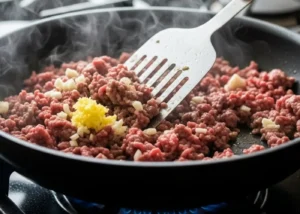
- Add the minced garlic and ginger to the skillet. Stir and cook for 1 to 2 minutes, until fragrant.
- Pour in the soy sauce and sesame oil, then add the chopped green onions. Stir until the beef is coated in the sauce.
- Taste and season with salt and black pepper as needed. If you like a hint of sweetness, stir in a teaspoon of brown sugar or honey and mix well.
- Let the beef simmer on low heat for 2 to 3 minutes so the flavors blend. If the pan looks dry, add a tablespoon of water.
- To assemble, spoon hot cooked rice into serving bowls. Top each bowl with a generous scoop of the seasoned ground beef.
- Add any toppings you like, such as sesame seeds, extra green onions, sliced cucumber, steamed vegetables, kimchi, or a fried egg. Serve warm.
Notes
Storage: Store cooked beef and rice in separate airtight containers in the refrigerator for up to 3 days. Reheat the beef in a skillet with a splash of water or in the microwave in short bursts. Rice can be reheated in the microwave with a damp paper towel on top. For freezing, cool the cooked beef completely, then freeze in small containers for up to 2 months. Thaw overnight in the fridge before reheating and serve over fresh cooked rice.
Substitutions: Use ground turkey or chicken instead of beef, adding a little extra sesame oil for richness. Swap soy sauce for low sodium soy sauce or tamari. Try cauliflower rice or shredded cabbage instead of rice for a lower carb bowl, or add more vegetables like broccoli, carrots, or spinach.
Make Ahead: Cook a double batch of the beef and portion it into containers for meal prep. Store with rice and veggies for easy grab and heat lunches during the week.
Tips: Let the beef brown a bit before stirring for better flavor. Add the garlic and ginger near the end of cooking so they do not burn. Taste and adjust soy, sesame oil, or a pinch of sugar until the sauce matches your preference.
Nutrition Disclaimer: Nutrition information is estimated and may vary based on specific ingredients and portion sizes.
- Prep Time: 10 minutes
- Cook Time: 15 minutes
- Category: Main Course
- Method: Stovetop
- Cuisine: Korean
Nutrition
- Serving Size: 1 bowl
- Calories: 400
- Sugar: 4g
- Sodium: 650mg
- Fat: 20g
- Saturated Fat: 7g
- Unsaturated Fat: 12g
- Trans Fat: 0g
- Carbohydrates: 32g
- Fiber: 1g
- Protein: 24g
- Cholesterol: 80mg
Storage, Reheating, And Meal Prep
This recipe is great for meal prep and busy weeks. You can cook once and eat several times, which is why Korean Ground Beef Bowl shows up on my Sunday cook list often.
Store the cooked beef and rice in separate airtight containers in the refrigerator for up to 3 days. Keeping them apart helps the rice stay fluffy and the beef stay saucy.
For reheating, warm the beef in a skillet over medium heat with a splash of water until hot. You can also microwave it in short bursts, stirring in between. Reheat rice in the microwave with a damp paper towel over the bowl to bring back some moisture.
If you want to freeze portions, cool the beef completely, then freeze it in small containers for up to 2 months. Thaw overnight in the fridge, reheat, and spoon over fresh cooked rice to rebuild your easy Korean ground beef bowl.
What To Serve With Korean Ground Beef Bowl
A Korean Ground Beef Bowl can be a complete meal by itself, but a few simple sides make the table feel full. You do not need anything fancy, just things that balance the savory beef and warm rice.
Here are some ideas that work well with this asian rice bowl recipe. Many of them are easy to prep while the beef cooks.
| Side Or Dish | Why It Works |
|---|---|
| Kimchi or pickled veggies | Adds crunch, acid, and heat, which cuts through the rich beef. |
| Simple cucumber salad | Cool and refreshing beside a hot Korean beef rice bowl. |
| Steamed broccoli or green beans | Easy way to add vegetables and color to the plate. |
| Fried or soft boiled eggs | Turn the bowl into a ground beef bulgogi bowl with a rich, runny yolk. |
| Other rice bowls | Serve with another option like this Korean BBQ meatball rice bowl for variety. |
Korean Ground Beef Bowl FAQ
Can I use ground turkey or chicken instead of beef?
Yes, ground turkey or chicken both work well in a Korean Ground Beef Bowl. Use a little extra sesame oil with lean meats so the filling does not taste dry.
What is the best rice to use for this Korean beef rice bowl?
Jasmine or short grain white rice gives the most classic feel and soaks up the sauce nicely. Brown rice works too if you want more fiber, and cauliflower rice is a good option if you want a lighter easy Korean ground beef bowl.
How can I make this less salty?
Use low sodium soy sauce and add water or unsalted broth if you want more sauce without extra salt. Taste before adding any extra salt and balance with a small pinch of sugar if needed.
Can I make a Korean Ground Beef Bowl spicy?
Yes, you can make it as spicy as you like. Add gochujang, sriracha, or red pepper flakes to the pan, or set them out at the table so everyone can spice their own bowl.
How long do leftovers last in the fridge?
Cooked beef will keep for about 3 days in an airtight container in the refrigerator. Store the rice separately for the best texture when you reheat your korean ground beef and rice later.
Can I pack this for lunch?
This recipe is great for lunches and weeknight rice bowls. Pack the beef and rice in a microwave safe container, add a few veggies on the side, and keep any fresh toppings like cucumber separate until serving.
What if I do not have fresh ginger?
You can use ground ginger in a pinch. Start with about one quarter teaspoon and taste, since it is stronger than fresh in a Korean Ground Beef Bowl.
Is this the same as bulgogi?
This recipe is a shortcut version of ground beef bulgogi flavors in bowl form. Classic bulgogi usually uses thin sliced beef that is marinated longer, but this bowl gives a similar taste in less time.
Nutrition Information For Korean Ground Beef Bowl
A Korean Ground Beef Bowl gives you protein from the beef and carbs from the rice, plus some healthy fats from sesame oil. You can add fiber and extra nutrients by piling on vegetables like broccoli, spinach, or cucumbers.
Exact nutrition will depend on your ingredients and portion size, but the original recipe estimates around 400 calories per serving. For more detailed information on ground beef nutrition, you can check the USDA database here: USDA ground beef nutrition.
Closing Thoughts
This Korean Ground Beef Bowl is one of those recipes you can keep in your back pocket for busy nights. It uses simple ingredients, comes together in about 25 minutes, and still feels like something special.
I hope this becomes a regular on your menu the way it has on mine. If you try it, leave a comment and let me know how you built your bowl, and if this easy Korean ground beef bowl saved your dinner plans this week.